Nothing reaches you that hasn't passed review
We review every video against the exact example its creator was told to copy. Our reviewers make every call, one submission at a time, and nothing gets through that doesn't pass. Quality control is our job, not a queue you work.
- Vetted ambassadors
- 40,000+Vetted ambassadors
- Countries
- 60+Countries
- Videos per month
- 10–5,000+Videos per month

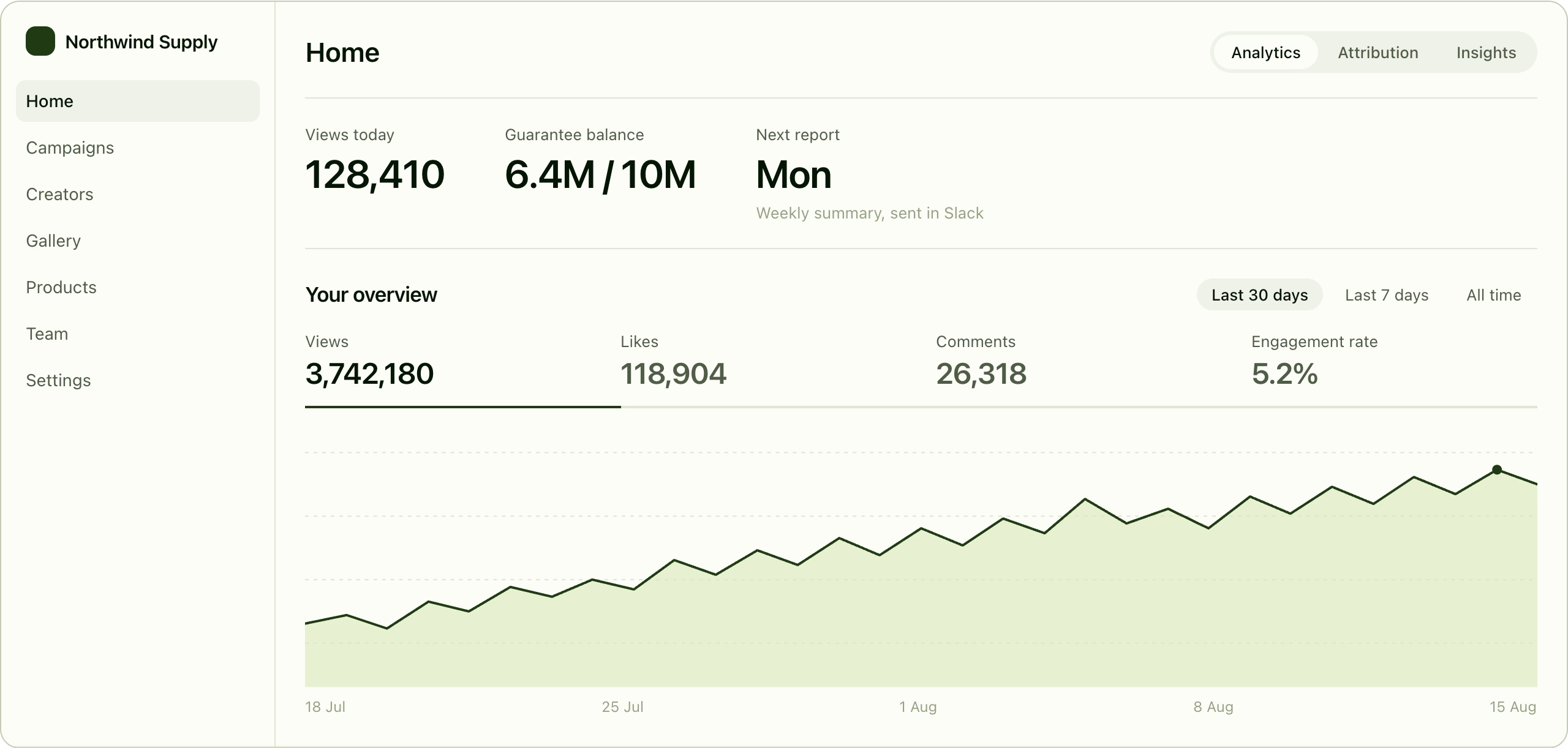
You buy views, not videos. Review is how we protect them.
One fixed monthly allotment at a contracted CPM converts into a guaranteed number of views. The guarantee is a floor, not a target — overdelivery is free, and shortfalls roll forward, so you never lose views you have paid for.
Quality review sits inside that number. Creators, production, review, usage rights and payouts are one invoice — and a video that fails review costs you nothing extra, because you are buying the views it eventually delivers, not the attempts it took.
Your CPM is benchmarked against real creator accounts in your niche, not read off a rate card.
A worked example
$100,000 monthly allotment ÷ $10 contracted CPM per 1,000 views
10,000,000 guaranteed views
That is the whole invoice — creators, production, usage rights and payouts included. Overdelivery is free.
Ten videos a month you can eyeball. Five thousand needs a standard.
Creator programmes rarely fail on effort. They fail on consistency. A brief gets read fifty different ways, feedback arrives as a vague note weeks later, and by the time something off-brand is noticed it is already public.
- 01.
Everyone reads the brief differently
Fifty creators, fifty readings. Without one concrete reference to point at, “on brand” means whatever each person already thought it meant.
- 02.
Late feedback has already cost you the video
A creator who hears nothing for a week films the next one the same way. Turnaround is part of the standard, not an afterthought.
- 03.
Nobody can say where the bar actually was
When a verdict lives in a chat thread, it cannot be checked, compared or carried into the next campaign.
We run 10 to 5,000+ videos a month, so nothing is judged on taste alone. Every submission is measured against the specific example that creator was told to copy — the same standard, the same evidence, every time.
Scored against the example, not a mood board
Every campaign carries a pool of examples — real videos, each with its own resolved instructions covering the hook, the format, what to show and what to leave out. The creator picks the one they are filming before they film it.
When the video lands, that same example is what it is reviewed against. Not “does this feel right” — does this match the thing they were told to copy.
Example · resolved instructions
- Hook
- Open on the problem, not the product. Inside the first two seconds.
- Format
- Vertical, filmed on a phone, no burned-in captions.
- Proof
- Show the product open on your own screen, not a stock capture.
- The offer
- Said out loud before the fifteen-second mark.
- Avoid
- No price claims on screen, no competitor names, no unlicensed music.
A recommendation from the machine. A decision from a person.
Our reviewers never start from a blank screen. Every submission is watched against its chosen example before a person opens it, and the pass comes with a recommendation attached.
A human confirms every single call. Nothing is auto-approved and nothing is auto-rejected.
Review queue
18 videos · 4 trials
@mira.k
VIM: accept
@tobiasrun
VIM: 2 fails
@joss.eats
VIM: accept
@lin.made
VIM: escalate
Hook lands inside 2s, product is on screen from 0:04, and the required disclosure is spoken and captioned. Lighting is soft but usable.
Caption
third month on the same bottle and I finally get the hype #ad
- Disclosure present
- Product visible 0:04
- No competitor on screen
- Vertical 9:16
- 01.
It gets watched against its example
The submission is compared to the exact example the creator chose, and scored on where it matches and where it drifts. Internally we call this VIM, our video intelligence model.
- 02.
A reviewer confirms or overrides it
The recommendation is a starting position, not a verdict. A person watches the video, reads the analysis and makes the call themselves.
- 03.
The human call is logged and fed back
Every confirmation and every override is recorded to calibrate what gets recommended next. The bar only ever gets more consistent.
It recommends. We decide. That order never flips.
And there is one verdict it never suggests: a terminal decline is always a person's call, and always ours to make — never something a score does on its own.
One video, and everything you need to judge it, on one screen
Nobody reviews a video against a memory of the brief. Everything needed to make the call sits on one screen, in a queue our reviewers move through keyboard-first, oldest first, one submission at a time.
Submission · 9:16
Video placeholder
The example · resolved instructions
Hook inside the first two seconds. Show the app open on your own phone. Say the offer out loud before the fifteen-second mark. Vertical, no captions burned in.
Video analysis
Hook, framing and spoken offer all match the example. Lighting sits below the example's baseline in the middle third.
Recommends · request changes
Ambassador · campaign progress
Trial video admitted · 3 of 4 campaign videos delivered · warm-up complete
- The submission, playing full height
- The chosen example's resolved instructions
- The analysis, and the call it recommends
- The ambassador's profile and past work
- Where they are in your campaign quota
- The conversation with them — we write as your brand
Two queues sit behind one toggle: trial videos waiting on admission, and campaign videos waiting on approval.
Two ways to say no, and they mean different things
Most of the time a video is not wrong, it is not finished. Treating those two cases the same is how programmes burn creators and lose weeks.
So there are two separate verdicts. One keeps the video alive and loops it. The other ends it — and only we can use it.
Soft · loops until it passes
Request changes
The video stays alive. The creator gets specific notes, fixes it, and resubmits the same video.
- Feedback
- Required. A bare rejection is not an option.
- Delivery
- Pushed to the creator and mirrored into their support chat.
- Next
- They fix and resubmit the same video, as many times as it takes.
- Who
- Us. Or you, if client video review is switched on.
Terminal · ours alone
Video decline
The hard no. There is no resubmission, and it is never suggested by a score — a person makes it.
- Feedback
- Optional. A note to the creator, not a required reason.
- Delivery
- The video is closed. Recovery is a fresh submission, not a fix.
- Next
- The creator keeps every video left in their quota.
- Who
- Fluencify only. Never a client, never a score.
Canned where it should be, written where it matters
The same fixes and the same praise come up hundreds of times a month, so our reviewers keep a library of them. Each note is tagged for where it belongs — a fix, a piece of praise, or both — and the picker only offers the ones that fit the verdict being given.
- Relight the middle thirdFix-it
- The hook lands — keep it exactlyPraise
- Say the offer out loud before 15sBoth
Hi Maya — the hook lands, keep it exactly as it is. One fix before this can go live: relight the middle third, it sits well under the example you're copying.
Names, brand and campaign fill themselves in. Then the note lands in an editable box. Nothing is ever sent automatically, and a reviewer can stack a few together before it goes.
The first video anyone makes for you is an audition
Nobody gets your product, a dedicated account or a video quota on trust. Every ambassador films a trial video against one of your examples first — before product access, reviewed exactly the way everything else is, and never billed to you.
By the time a video counts toward your allotment, the person filming it has already proved they can follow the brief.
- 01.
They are invited, or they apply
Matched to your campaign from our vetted ambassador network, or applying to it themselves.
- 02.
One video, filmed before access
Against a chosen example. It does not count toward your quota and it is not on your invoice.
- 03.
Same queue, same standard
Trial videos sit in their own queue in review mode and are turned around within 24 hours.
- 04.
Admitted, or the invite ends
Admission opens product distribution, account linking and a quota. Declining closes it there.
Feedback that arrives while it still matters
Speed is not a separate promise from quality. A note that arrives a week late has already been overtaken by the next three videos.
- Within 24 hours
- Trial videos are reviewed and either admitted or turned back, so nobody sits waiting for permission to start.
- Within 48 hours
- Campaign videos get their verdict, so a fix lands while the creator still has the set, the product and the memory of the shoot.
- Every video
- No sampling and no spot checks. Whether it is ten a month or five thousand, each one is watched end to end.

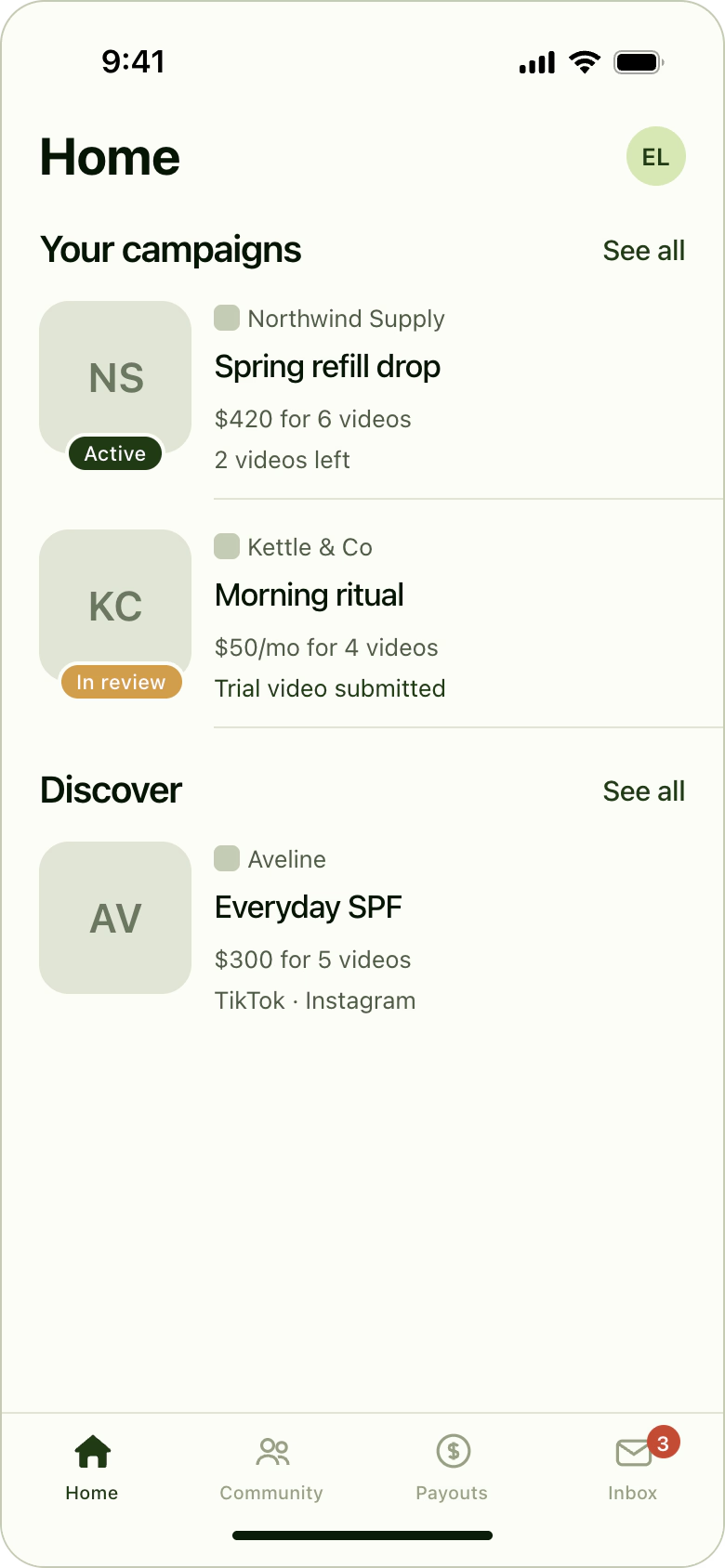
You can watch the review. You are never the bottleneck.
By default we review end to end and you see finished work. If you want eyes on submissions as they come in, we switch client video review on for your brand — something we turn on for you, not a tier you buy.

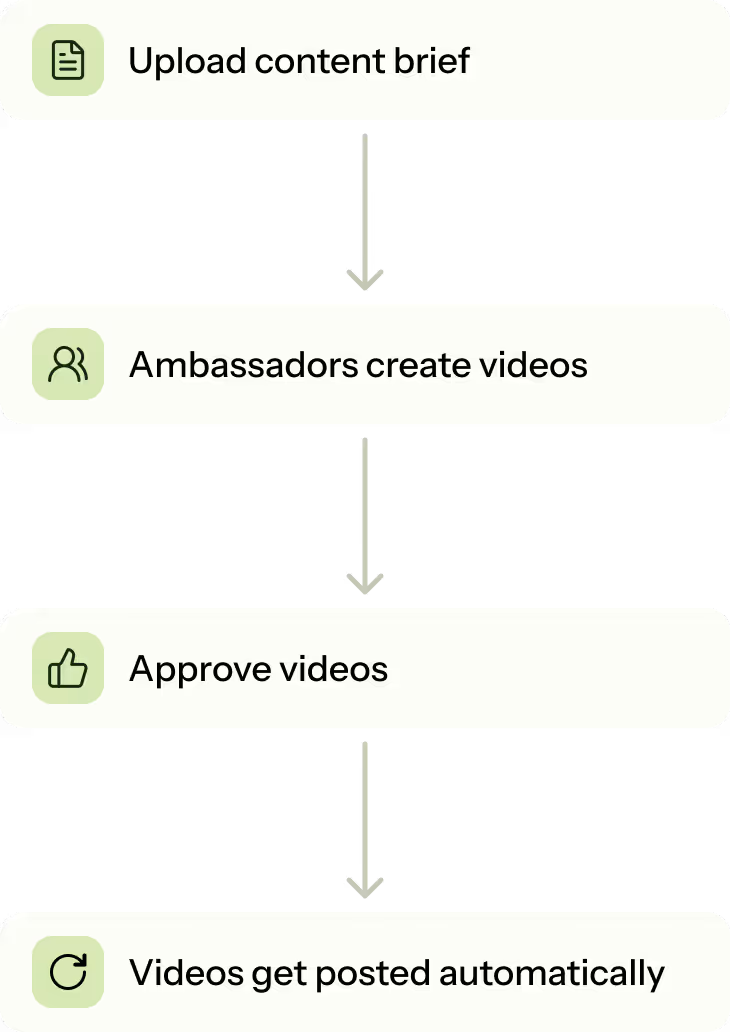
We own the quality. That is the part you are buying.
An approval queue you have to staff is not a feature, it is work moved onto your team. Full-service means the standard is enforced whether or not anyone on your side logs in.
It gives you visibility, not a veto — and that is deliberate. Our review runs whether or not you look, so a quiet week on your side never slows a single video down.
What switching it on gives you
- Every campaign video submission, as it lands
- Two actions: approve, or request changes in your own words
- The same review surface our own team works from
What stays ours, on purpose
- The terminal decline — never offered to a client
- Trial videos and admissions, which never reach your tab
- The queue itself — nothing is ever held waiting on you
What people ask about review
The ones brand teams ask on the first call.
How do you control content quality?
We review every video against your brand guidelines before it reaches you. Nothing gets through that doesn't pass. Each submission is judged against the specific example its creator was told to copy, and a person confirms every call.
Do I have to approve videos myself?
No. Every video is scored against your guidelines before it reaches you and nothing that fails gets through. We can switch client video review on if you want eyes on the work — delivery still never waits on you.
Something here specific to your brand guidelines? Bring it to the strategy call — that call is where the standard gets set.
Your job is one strategy call. Ours is everything after it.
Including every video that gets watched, judged against your example and signed off by a person before it ever reaches you.